
_edited.jpg)
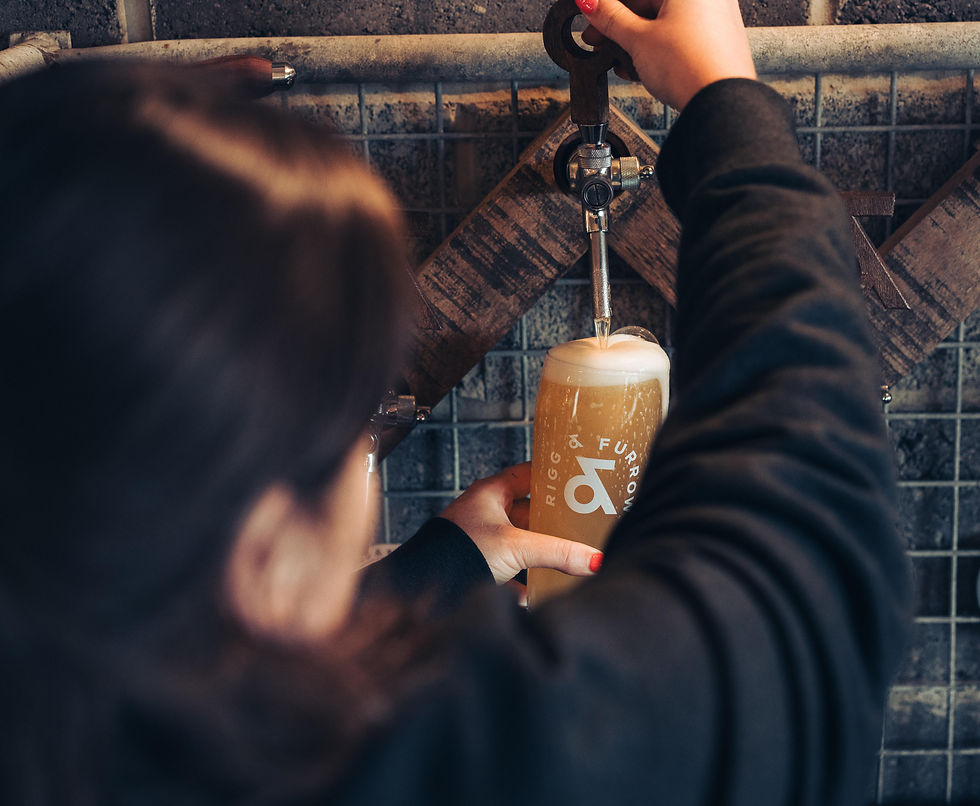
Harriet is the Sales & Marketing Manager at Rigg & Furrow Brewery, a Northumberland-based farmhouse brewery known for its modern approach to rural brewing traditions. With years of experience across pubs, bars, and the brewing industry, Harriet has become a passionate advocate for community, collaboration, and creating more accessible opportunities for women within hospitality and beer. In this interview, we spoke about her journey through the industry, the challenges women still face, the importance of finding your place within hospitality, and the power of bringing women together through projects like the International Women’s Day collaboration beer with The Table Project
Firstly, can you tell us a bit about Rigg and Furrow?
Rigg & Furrow was established in 2017 by Theo and Pippa. We’re a farmhouse brewery, specialising in innovative, modern beers, with inspiration drawn from the rural brewing traditions of the UK and the continent. We’re based on Pippa’s family farm, which really informs and inspires our brewing style. That connection to the land is a big part of who we are and what we do.
Over the last nine years, the brewery has grown and evolved hugely. It started with just Theo and Pippa doing absolutely everything, and now we’re a team of nine or ten, with an on-site taproom open every weekend and an event space, The End Hemmel. We sell beer nationwide, from rural local pubs in Northumberland to bars all over the UK.
How did you get started in this industry?
“I worked at the Bridge Hotel in Newcastle City Centre, many moons ago, when I was 17! That’s where it all started.
I worked in pubs throughout university and after graduating decided that I wanted to continue, I wanted to forge myself a career in this industry. So, from there, I’ve worked in various pubs, bars and cafes, starting off collecting glasses, being a kitchen porter, even cooking and of course pulling plenty of pints. I’ve worked my way up over the years to various management roles, before making the move over to the brewing industry nearly a decade ago.”
What’s your ideal weekend of eats and drinks in Newcastle?
"My weekend revolves around two equally important things: my dog and Newcastle United.
I live in Gosforth, so I must shout out the incredible pubs on Gosforth High Street, you’ll find me there at least once a week. Weekends usually start with coffee and dog walks, so we’ll stop at the North Shore van on the Town Moor, Roma when we’re nearby, spots along the coast, Pink Lane, Pure Knead - anywhere we can walk the dog and grab coffee and pastries.
Drinking obviously revolves heavily around the football, but all the classics: the Free Trade Inn, Donzoko, Full Circle, House, Elder.
Food-wise, my perfect weekend starts with pastries. Lunch is usually a sandwich, Soku at Assemble is up there, or just mooching around Grainger Market. For dinner, I’m in the pub for a beige buffet: crisps, scampi fries, etc. Then a late-night pizza close to home at Gosforth Flame. It’s terrible, but amazing. If I could transport Gingerino’s to Gosforth, I absolutely would.
The classy part of me says, ‘Come on, Harriet,’ so I’ll also shout out my all-time favourites: Cook House, St Vincent, Omni, in Monkseaton."
What would you say are the biggest challenges for women in the industry, and what advice would you give to any women facing those challenges?
“One of the biggest issues from my perspective is access. We see plenty of women on bars and serving tables, but they often don’t have the mobility or access to develop beyond that. These women deserve opportunities to receive training, gain qualifications, and progress in the industry. Until we improve accessibility, we won’t see the shifts that we want to see.
In terms of advice, we need to believe in ourselves more. Hospitality is so much more than waiting tables, pouring pints, or cooking food. It’s a skill, a talent, and a craft that we work incredibly hard to achieve. You are qualified, you are knowledgeable. In any other industry that would be celebrated, not stigmatised. Working in hospitality teaches you so much. It’s about people, relationships, trust, things that matter in every aspect of life.
And keep showing up. If you love this industry, go and find where you fit and what you want to do. For me, finding my place was the missing piece. Fight for yourself and find where you belong.”
Who are some of the women who have most inspired you within the industry?
“My sister is a huge one. She was my first ever manager when I entered the industry, and she showed me that this industry can be a career. I’m really grateful for that.
My old boss, Katie Marriott from Nomadic Beers in Leeds, which unfortunately no longer exists, was also a massive inspiration. She actually left a company after finding their practices didn’t align with what she believed in and went on to start her own business. Watching her say, ‘I’m going to do this by myself.’, I think that’s so inspiring. She is a powerhouse.
Of course, Anna from Cook House. To be able to build a whole sort of empire in the North East off the back of a philosophy of wanting ‘cooks’ rather than ‘chefs’, many of whom turned out to be women, it’s been incredible to watch that journey.
There are also so many people in the brewing world right now. Aidy up at Fyne Ales, who puts on Fyne Fest, one of my favourite weekends of the year. Ailsa at House, and everything she’s doing with Heaton Wine Club. Honestly, there are too many great people to mention, I could be here all day with a little fan club.
And what Becky is doing at The Table is amazing. I think we really needed a space like this to make ourselves heard, to come together and meet like-minded people, and to create real, tangible change.
I’m not very good at talking about myself, but all these women deserve to shout about themselves. I look up to them and feel so proud of what I do, and I think being able to shout about yourself as a woman in this industry is so important. It’s amazing that there’s even a list of people I can name for this question, when maybe there wouldn’t have been 10 or 15 years ago. That said, there’s still obviously such a long way to go for women in this industry.”
What is the achievement from the industry that you’re most proud of?
“Firstly, still being in it. Plenty of personal and professional things have popped up over the years, and I’m proud of myself for still showing up and still being here to watch all the change I’ve just spoken about. If you’d told me 10 years ago that I’d still be here doing what I do now, I think I’d be really proud of myself.
Remembering that daily is important to me.
We’re now in our third year of the From the Land festival, and that really is my baby. I’m so proud of watching all the breweries come together for that weekend and seeing them have an amazing time, alongside our customers discovering new small businesses. It’s months of work condensed into two days, and then you sit down afterwards and think, ‘Yeah, that was pretty cool.’”
What has been most important in helping you remain in the industry and fall in love with it?
“I think it’s all about finding your place, finding where you fit. I’ve been made redundant twice in the past six
years, and after that it would have been very easy to throw in the towel. But I’m so, so glad I didn’t. It sounds corny, but if those things hadn’t happened, there’s no way I’d be where I am today.
Once I realised, I wanted to work in beer, I focused on making that happen. I worked hard to turn my interests into my job. It shouldn’t be looked down upon to stay in this industry; it shows real determination to do what you love. Why give up on something you’re so talented at? I’ve also been very lucky to have a network of people who were willing to take a chance on me, even though I’d never worked in a brewery before. It’s a shame, but this industry can still be very much ‘it’s not what you know, it’s who you know’. That’s an issue, but it also presents a huge opportunity to be more inclusive and bring more women into the fold.
We need to give women more chances to meet experienced professionals, to see that it is possible, and to build networks that can open doors. That kind of access could be transformative.”
What is the IWD beer, and what impact do you hope it will have?
“When Becky approached me about it, I jumped at the chance. Coming from outside of Newcastle, it’s a brilliant way to get our name out there as a brewery that celebrates women. From a business point of view, that’s great —but more importantly, bringing these incredible women together in a room on brew day is genuinely beautiful. And on top of that, we’re brewing a really delicious beer. It’s a hazy, hoppy pale, around 4.5%, super easy drinking. A percentage of the money from the beer will go back to The Table project to help Becky continue the amazing work she does for women in the industry. More than that, it shows that this group of talented women has come together to create something special. Making that visible through a product feels really powerful. We hope it inspires others to do similar things, and
encourages women to create together and support one another. And honestly, we hope people come and enjoy the beer with us, to join us in saying ‘f*** you’ to anyone who tries to suppress this side of the industry, and to show that women can thrive in what has traditionally been a very masculine space.”
Harriet’s story is all about resilience, passion and finding your place. From pulling pints at 17 to leading sales, marketing and major events at Rigg & Furrow, she’s built a career in beer through hard work and backing herself.
Her honesty about access and opportunity is a reminder that it’s not just about opening doors — it’s about feeling confident enough to walk through them. Harriet’s journey shows that women don’t just belong in this industry, they’re helping shape where it goes next.
